
You can be excellent at what you do and still be overlooked.
You can have years of experience, impressive qualifications, valuable skills, and a track record of good work—and still struggle to attract the right clients, opportunities, partnerships, or career opportunities.
Why?
Because being good at something and being known for it are two different things.
Think about two professionals with similar skills and experience. One does excellent work but rarely talks about it, shares ideas, builds relationships, or demonstrates expertise publicly. The other consistently shares useful insights, talks about problems in their industry, documents their work, and builds relationships with people in their field.
When a new opportunity comes up, who is more likely to be remembered?
Usually, it is the person people already know, understand, and trust.
That is where personal branding becomes powerful.
Personal branding is not simply about getting more followers, becoming famous, or making yourself look impressive online. It is about making your value easier to discover, understand, remember, and trust.
When you build a strong personal brand, something changes.
People begin to associate your name with particular ideas, skills, problems, experiences, or results.
You become the person someone thinks of when they need a particular solution.
A founder might think:
“I know someone who can help with this.”
A recruiter might think:
“We should talk to her.”
A podcast host might think:
“She would be a great guest for this topic.”
A potential client might think:
“I’ve been following her work. I think she can help us.”
That is the real power of personal branding.
Your personal brand works before you enter the room.
It creates familiarity before the first conversation. It demonstrates your expertise before the sales call. It can build credibility before someone sends you a message.
And over time, those small signals can compound into something much bigger: trust, opportunities, relationships, influence, and professional freedom.
So, in this article, we’re going beyond the usual conversation about followers, visibility, and “building an audience.”
Let’s look at the real benefits of building a personal brand and, more importantly, what you can actually do to start experiencing those benefits yourself.
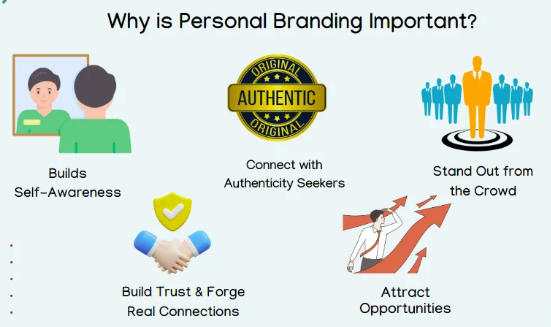
1. You Become Easier to Find
Before people can trust you, hire you, recommend you, or collaborate with you, they have to find you.
That sounds obvious, but it is one of the biggest advantages of building a personal brand.
Imagine someone needs a copywriter who understands SaaS marketing. Or a founder is looking for a LinkedIn strategist. Or a company needs a speaker who can explain artificial intelligence to a non-technical audience.
They don’t necessarily start by asking, “Who is the most talented person in the world?”
They search.
They look through LinkedIn. They search Google. They watch YouTube videos. They listen to podcasts. They ask their network for recommendations. They check someone’s social media profile before deciding whether to contact them.
This is where your personal brand becomes an asset.
Every useful article you publish, video you create, podcast you appear on, case study you share, or thoughtful conversation you contribute to gives people another way to discover you.
Think About Neil Patel
Neil Patel is a good example.
If you search online for topics around SEO, content marketing, or digital marketing, there is a good chance you will encounter his name or his work.
That visibility did not come from simply saying, “I’m a marketing expert.”
It came from years of publishing educational content that demonstrates his knowledge.
The important lesson isn’t that you need to become the next Neil Patel.
You don’t.
The lesson is that expertise becomes much more valuable when people can actually find evidence of it.
Your knowledge sitting inside your head can help you do your job.
Your knowledge expressed publicly can help other people discover you.
Your Content Becomes a Trail Back to You
Think of everything you publish as leaving a trail.
Someone might discover:
- A LinkedIn post you wrote six months ago.
- A YouTube video you published last year.
- A guest article you contributed to.
- A podcast interview.
- A case study showing how you solved a problem.
- A useful comment you left on someone else’s post.
- Your portfolio or personal website.
Individually, these things may not seem significant.
Together, they create a public body of work.
And that body of work answers an important question for anyone considering working with you:
“What does this person actually know?”
This is why I don’t think personal branding starts with trying to become popular.
It starts with becoming findable for something valuable.
Do This Now
Write down three things you want people to associate with your name.
For example:
Content strategist → Lead generation → Personal branding
Then ask yourself:
“If someone searched for me today, would they find enough evidence that I actually know these things?”
If the answer is no, you now know what your content needs to start demonstrating.
2. You Build Trust Before You Meet Someone
Being visible is only the beginning.
Someone can see your name a hundred times and still have no reason to trust you.
The next benefit of personal branding is therefore much more important:
You can begin building trust before the first conversation.
Think about the last time you considered buying a service from someone you had never met.
You probably did some research.
You may have looked at their website, LinkedIn profile, reviews, portfolio, social media posts, testimonials, previous work, or interviews.
Why?
Because hiring someone involves risk.
You want to know:
Can this person actually solve my problem?
A strong personal brand helps answer that question before you ever speak to the person.
Your Content Is Public Evidence of How You Think
This is one of the most important ideas I want you to take away from this article:
Your content is not just marketing. It is public evidence of how you think.
When you consistently teach, explain, analyze, document, and share useful perspectives, people get a preview of your expertise.
For example, someone who consistently publishes thoughtful analysis about personal branding, content strategy, and lead generation is giving potential clients an opportunity to see how they approach problems.
They don’t have to take the person’s word for it.
They can observe the thinking.
That distinction matters.
Compare these two statements:
“I’m an expert in digital marketing.”
and:
“Here are three reasons your content gets engagement but generates no leads—and here’s how I’d fix each one.”
The first is a claim.
The second is evidence.
Strong personal brands don’t just tell people what they know. They demonstrate it.
Look at Simon Sinek
Simon Sinek provides a useful example.
His personal brand is strongly associated with leadership, purpose, organizational culture, and the idea of starting with “why.”
His audience doesn’t need him to introduce himself from scratch every time.
Years of talks, books, interviews, and educational content have repeatedly reinforced what he thinks about and what he is known for.
That consistency creates familiarity.
And familiarity, combined with demonstrated expertise and credible results, can make trust easier to build.
Trust Doesn’t Mean Everyone Likes You
This is important.
Building a personal brand does not mean trying to make everyone like you.
In fact, trying to appeal to everyone can make your brand forgettable.
You want the right people to understand:
- What you know.
- What you believe.
- What problems you solve.
- How you approach those problems.
- What kind of person you are to work with.
Your personal brand should reduce uncertainty.
A potential client should be able to look at your work and think:
“I understand what she does, how she thinks, and the kind of value she could bring.”
That’s trust beginning before the sales conversation.
Do This Now
Instead of creating another post that says:
“I’m passionate about helping businesses grow.”
Teach something.
Explain a mistake you’ve seen.
Break down a problem.
Share a lesson from your experience.
Show how you achieved a result.
Tell people what you would do differently.
Give them something useful enough to make them think:
“This person knows what she’s talking about.”
That’s how authority starts.
3. You Become the Person People Remember
Being visible is useful.
Being remembered for something specific is even more valuable.
Think about what happens when someone says:
“I need a good graphic designer.”
If your name immediately comes to mind, you’ve achieved something important.
Or:
“Who knows a good SEO strategist?”
“Who can help me improve my LinkedIn presence?”
“Who should we invite to speak about entrepreneurship?”
“Do you know someone who understands social media advertising?”
Personal branding helps you become part of those conversations.
This is called top-of-mind awareness: being one of the first people someone thinks about when a particular need arises.
And this is where a personal brand can quietly create opportunities.
You may not see the conversation happening, but your name can be circulating in rooms you’re not in.
Think About MrBeast
MrBeast is an extreme example, but the principle is useful.
When people think of large-scale YouTube challenges, spectacle-driven videos, or creator-led philanthropy, his name is difficult to ignore.
That’s not an accident.
His content has repeatedly reinforced a recognizable identity.
You don’t need millions of followers to achieve the same basic effect.
If you’re a career coach, you want people to associate you with career transitions.
If you’re a financial educator, you want people to associate you with a particular financial problem or audience.
If you’re a content strategist, you might want to become known for turning expertise into content that generates leads.
The goal is not:
“Everyone should know me.”
The goal is:
“The right people should know what to come to me for.”
Your Niche Makes You More Memorable
This is why positioning matters so much.
Compare:
“I’m a marketer.”
with:
“I help service businesses turn their expertise into content that generates qualified leads.”
The second statement gives people something to remember.
It creates a mental category.
Now, when someone meets a business owner struggling to turn content into leads, there is a clearer possibility that your name will come up.
You are no longer just another marketer.
You’ve given people a reason to remember you.
Referrals Become Easier
This also explains why strong personal brands often generate better referrals.
People don’t refer vague descriptions very well.
Imagine someone telling a friend:
“I know a really good business person.”
That’s not very useful.
But:
“I know someone who helps coaches turn their expertise into a content strategy that generates leads.”
Now the referral has context.
Your personal brand gives other people the language they need to recommend you.
Do This Now
Complete this sentence:
“When someone thinks about ________, I want them to think about me.”
Don’t put “everything” in the blank.
Choose something specific enough to own.
Then make your content repeatedly reinforce that association.
4. You Attract Better Clients, Collaborators and Opportunities
One of the biggest misconceptions about personal branding is that its main purpose is to attract customers.
It can do that, but the effect is much broader.
A strong personal brand can attract people who want to work with you in different ways.
That might include:
- Clients
- Employers
- Recruiters
- Business partners
- Podcast hosts
- Event organizers
- Journalists
- Investors
- Other creators
- Mentors
- Industry peers
The common factor is simple:
They already have some idea of who you are and what you can do.
That changes the nature of the conversation.
Content Can Become Your Silent Salesperson
Suppose you’re a consultant.
Without a personal brand, a potential client may first encounter you through a cold email.
You have to convince them:
“I’m capable. I understand your problem. I can help you.”
But imagine they have already seen 20 of your posts over several months.
They’ve watched you explain their problem and analyze companies in their industry.
They’ve learned something from you, see examples of your work and even noticed how you respond to other people’s questions.
Now the conversation starts differently.
You aren’t completely unknown. Your content has already done some of the introduction for you.
That’s why I think of content as more than marketing.
Good content pre-sells your thinking.
Justin Welsh Is a Useful Example
Justin Welsh built a highly recognizable personal brand around solopreneurship, LinkedIn content, audience building, and digital products.
His audience isn’t simply consuming advertisements for his services.
They are repeatedly exposed to his ideas, frameworks, experiences, and lessons.
That body of content helps people understand his expertise and approach.
The lesson isn’t that everyone should copy Justin Welsh’s business model.
It’s this:
When people repeatedly experience the value of your thinking, they have more reasons to want to work with you.
But There Is an Important Difference
Personal branding doesn’t mean:
“Post constantly and clients will magically appear.”
That’s not how it works.
Your brand needs substance behind it.
You still need:
- Real skills
- Good products or services
- Strong execution
- Evidence of results
- Good communication
- Professionalism
- Consistent delivery
Your personal brand creates attention and reduces uncertainty.
Your actual work determines whether that trust survives.
Do This Now
Look at your last 10 pieces of content.
Ask:
“If a potential client saw only these 10 pieces, would they understand why they should work with me?”
If not, your content may be generating visibility without building enough preference.
Start creating content that demonstrates:
- What you know
- How you think
- How you solve problems
- What results you can create
- What makes your approach different
That’s how visibility begins turning into opportunity.
5. You Can Increase Your Perceived Value
Let’s talk about money.
A strong personal brand can help you compete on value instead of price.
But let’s be precise here.
Personal branding doesn’t automatically mean you can charge whatever you want.
It doesn’t turn an inexperienced professional into an expert.
What it can do is make your existing expertise more visible and easier to understand.
And that can influence how people perceive your value.
The Commodity Problem
Imagine two professionals offer essentially the same service.
Person A says:
“I design websites.”
Person B says:
“I help service businesses turn their websites into lead-generation systems.”
They may have similar technical abilities.
But Person B has positioned the service around a business problem, not simply a task.
That distinction matters.
The first person is easier to compare with hundreds of other web designers.
The second person is beginning to occupy a more specific position in the buyer’s mind.
That’s positioning.
Expertise Becomes More Valuable When It Is Recognizable
Think about creators such as Ali Abdaal.
He didn’t build his reputation simply by saying:
“I’m knowledgeable about productivity.”
He consistently created content around studying, productivity, learning, business, and building a creator-led career.
Over time, those topics became associated with his name.
That association is part of the value of a personal brand.
People aren’t only buying information.
They’re buying a trusted perspective.
The same principle applies to consultants, coaches, freelancers, executives, designers, writers, educators, and other professionals.
From “What Do You Charge?” to “How Can We Work Together?”
When your positioning is weak, conversations often begin with price.
“How much do you charge?”
When your expertise and reputation are clearer, the conversation can become:
“Can you help us solve this?”
That’s a much better position to be in.
Because you’re no longer being evaluated solely as a pair of hands.
You’re being evaluated for your knowledge, judgment, experience, perspective, and ability to produce a result.
Do This Now
Look at how you currently describe your work.
If it sounds like a job title, make it more specific.
Instead of:
“I’m a social media manager.”
Try:
“I help ecommerce brands turn social media attention into qualified leads and sales.”
Instead of:
“I’m a copywriter.”
Try:
“I write conversion-focused landing pages for SaaS companies.”
Instead of:
“I’m a career coach.”
Try:
“I help mid-career professionals reposition their experience for better career opportunities.”
You don’t have to invent an impressive title.
Clarify the problem you solve and the people you solve it for.
That’s where perceived value starts.
6. Your Personal Brand Can Strengthen the Company You Work For
Personal branding isn’t only for freelancers, coaches, consultants, or people building businesses.
It can also make you more valuable inside an organization.
When employees and executives become visible experts, their credibility can extend to the companies they represent.
Think about Richard Branson.
Virgin is a huge business ecosystem, but Branson’s personality and reputation have also become closely associated with the broader Virgin identity.
Or consider Tony Elumelu.
His public presence around entrepreneurship, African business, leadership, and philanthropy doesn’t exist separately from his professional work. His visibility also creates attention around the organizations and initiatives associated with him.
This is sometimes described as a halo effect: positive perceptions of one person can influence perceptions of an organization associated with that person.
Employees Can Benefit Too
You don’t have to be the CEO.
Imagine you’re a marketing manager at a technology company.
You regularly publish useful insights about marketing trends, share lessons from campaigns, speak at industry events, and contribute thoughtful commentary to conversations in your field.
People begin recognizing you as someone who understands marketing.
That visibility can benefit your employer.
But it can also benefit your career.
You’re building professional equity that isn’t completely dependent on your job title.
The Important Boundary
There is a difference between building a personal brand and turning every company update into self-promotion.
Your goal shouldn’t be:
“Look at me. Look at me. Look at me.”
Instead:
“Here is what I’ve learned. Here is what I know. Here is how this can help you.”
When you consistently create value, your visibility can benefit both you and the organization you represent.
Do This Now
If you work for an organization, identify three areas where you have genuine expertise.
Then start sharing:
- Lessons you’ve learned
- Industry insights
- Problems you’ve solved
- Useful frameworks
- Behind-the-scenes lessons
- Trends you’re observing
You don’t have to reveal confidential company information.
Build authority around your expertise, not around secrets from your employer.
That way, you’re creating a professional reputation that can grow with you rather than one that disappears when your job changes.
Ready to take your personal branding journey seriously? Check out my Personal Branding Accelerator program.
 0
0
 20
20
 20
20