A strong personal brand is not built by simply posting more often, gaining followers, or making your profile look polished. It is built when your name becomes associated with something specific; an idea, problem, expertise, perspective, or transformation that people can easily remember and trust.
That is why studying established personal brands can be more useful than collecting generic branding tips. When I look at experts such as Seth Godin, Marie Forleo, Chris Do, Neil Patel, Justin Welsh, and Brené Brown, I see very different personalities and business models, but I also see deliberate choices about what they teach, who they speak to, how they communicate, and what they want to be known for.
The goal of this article is not to tell you to copy their content, personality, or posting style. Instead, we will reverse-engineer what they did well, examine how their brands developed, and extract practical decisions you can apply to your own positioning, content, authority, and business.
Think of it like studying great buildings: you do not copy the building brick for brick; you study the structure that makes it stand. The same principle applies to personal branding.
1. Seth Godin: He Built a Brand Around Ideas
Seth Godin is a useful place to start because his personal brand is not built around constantly telling people who he is. Instead, he has spent decades publishing ideas about marketing, creativity, leadership, and meaningful work; Seth’s blog alone contains thousands of posts, alongside books, courses, podcasts, and other projects.
What makes this powerful is association. When people repeatedly encounter your ideas around a particular subject, your name gradually becomes attached to that subject; much like a signpost that keeps pointing in the same direction.

What He Does Differently
Godin has developed a remarkably consistent intellectual territory. He doesn’t need every post to introduce his credentials because the accumulated body of work does that job for him.
More importantly, he doesn’t appear to chase novelty for its own sake; he returns to recurring themes and examines them from different angles. That consistency makes his thinking recognizable and gives his audience a clear reason to keep paying attention.
What You Can Learn From Him
Instead of asking, “What should I post today?”, start asking, “What do I want people to associate with my name?”
Then choose three to five themes you can discuss deeply for years. For example, if you’re a marketing consultant, your territory might be positioning, content strategy, conversion, customer research, and brand growth.
Practical exercise: Complete this sentence:
“I want to become known for helping people understand ______.”
Then build your content around that territory. You don’t need 20 unrelated content pillars; you need a few strong ideas that you can explain, challenge, demonstrate, and develop repeatedly.
The lesson: Don’t build a brand around everything you know. Build it around what you want to be known for.
2. Gary Vaynerchuk: He Made His Personality Part of the Product
Gary Vaynerchuk did not begin with a giant personal brand. At 14, he started working in his family’s liquor store, later helping turn it into Wine Library and eventually launching WineLibraryTV in 2006, where he published wine reviews and commentary almost daily for five years.
What changed everything was that Gary didn’t communicate like a traditional wine expert. He brought energy, opinions, humor, and an unfiltered personality to a subject that could easily have been presented in a much more formal way.

What He Does Differently
Gary understands that people don’t only remember information; they remember how information is delivered. His personality became inseparable from his content, and over time, that recognizable style helped him move from being known for wine to being known for entrepreneurship, marketing, media, and business.
He also built content around recurring formats instead of creating every piece from scratch. His pillar-content approach takes larger content such as shows, keynotes, and interviews and turns them into smaller pieces distributed across platforms.
What You Can Learn From Him
You don’t need to become louder or more dramatic to make your personality part of your brand. Instead, identify the natural characteristics that make your communication feel like you and deliberately bring more of them into your content.
For example, if you’re naturally analytical, make your breakdowns sharper; if you’re a storyteller, use stories to explain your expertise; if you’re direct, stop burying your advice under unnecessary corporate language. Your personality should be the delivery system for your expertise, not a substitute for it.
Practical exercise: Record yourself explaining one problem you solve for clients without trying to sound “professional.” Then turn the recording into a post, video, or article while keeping your natural language and opinions.
The lesson: Your expertise tells people what you know. Your personality gives them a reason to remember you.
3. Neil Patel: He Turned Expertise Into Searchable Assets
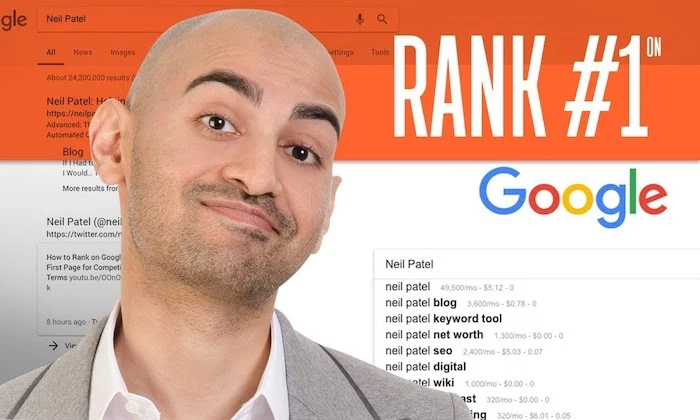
Neil Patel’s personal brand grew from solving a practical problem: figuring out how to generate traffic online. He started experimenting with websites as a teenager, taught himself online marketing after an early marketing firm failed to deliver results, and eventually built his reputation around SEO and digital marketing.
What stands out is how deliberately he made his expertise discoverable. His website became a large library of educational content, while tools such as Ubersuggest gave people a practical way to experience his expertise rather than simply read about it.
What He Does Differently
Patel doesn’t rely entirely on social media to demonstrate expertise. He creates content around questions people are already searching for, connects that content to his niche, and uses his website as a long-term authority asset; blogging.
That distinction matters because a social post has a short lifespan, while a useful article can continue bringing the right people to your brand months or years later. In other words, he treats content as infrastructure, not just promotion.
What You Can Learn From Him
Start turning your knowledge into assets that people can find when they need help. If you are a brand strategist, for example, don’t only post “5 branding tips” on LinkedIn; create detailed resources around questions your ideal clients actually ask, such as how to reposition a service business or evaluate a weak brand message.
Practical exercise: Write down 20 questions clients or prospects ask you repeatedly, then turn the best five into articles, videos, guides, checklists, or templates. Optimize each around the language your audience uses when searching for the answer.
You can also create something people can use, not just consume; a template, calculator, framework, audit checklist, or diagnostic tool. That gives your audience a direct experience of your expertise.
The lesson: Don’t just publish content. Build searchable assets that demonstrate what you know.
4. Chris Do: He Turned Expertise Into Education
Chris Do spent more than two decades building Blind, a motion-design and branding studio, before a 2014 invitation from his college friend Jose Caballer pushed him to experiment with YouTube. He initially saw the channel as a way to sell courses, but when that approach did not work, he shifted toward simply teaching and giving away useful information; that decision eventually became the foundation of The Futur.
That shift is important because Do didn’t build his reputation by saying, “I’m an expert.” He demonstrated expertise repeatedly through conversations, breakdowns, lessons, and practical discussions about design, business, pricing, sales, and communication. (LinkedIn)

What He Does Differently
Do sits at the intersection of design and business, rather than limiting his brand to design execution. That distinction gave him a much clearer territory: helping creative professionals understand the business skills they need to make a living from their creativity.
He also uses education as a form of marketing without making every piece of content feel like a sales pitch. The content itself demonstrates his thinking, which means the audience can experience his expertise before deciding whether they want to buy from him.
What You Can Learn From Him
If you’re a service provider, don’t only show finished work. Teach the thinking behind the work.
For example, a brand strategist could explain why a client’s positioning was weak, how the messaging was rebuilt, and what strategic decisions changed the result. A copywriter could break down why a landing page isn’t converting instead of simply posting another “copywriting tip.”
Practical exercise: List 10 questions clients repeatedly ask you. Choose one, record yourself explaining the answer as if you were teaching a client, and turn that explanation into a post, video, carousel, or article.
Over time, those individual lessons become a library of proof. You’re no longer just claiming expertise; you’re leaving evidence of how you think.
The lesson: Don’t just show people what you can do. Teach them how you think.
5. Alex Hormozi: He Built Recognition Through Repetition
Alex Hormozi built his reputation by teaching business growth through a relatively small set of recurring ideas: offers, sales, customer acquisition, pricing, and scaling. Rather than constantly searching for a completely new message, he repeatedly explains these concepts through different examples, stories, frameworks, and pieces of content.
That repetition is one of the reasons his brand is easy to recognize. You may encounter a short video, a quote, or a business breakdown and quickly understand the type of thinking behind it because the underlying message remains consistent.

What He Does Differently
Hormozi understands something many experts resist: your audience needs to hear your important ideas more often than you think. You might feel like you’ve already talked about positioning ten times, but someone discovering your brand today may be hearing it for the first time.
Think of your core ideas like songs on an album. You don’t need a completely different artist every time you press play; you need enough variation to keep hearing the same artist from different angles.
What You Can Learn From Him
Stop treating repetition as a content problem. If an idea is central to your expertise, keep returning to it with new examples, client situations, mistakes, case studies, questions, and perspectives.
For example, if you believe “more content isn’t the solution to weak positioning,” you can explain that idea through a client story, a before-and-after positioning example, a common mistake, a checklist, or a detailed breakdown.
Practical exercise: Write down your five strongest professional beliefs. For each one, create five different ways to explain it, giving you 25 content ideas without changing your core message.
The lesson: Don’t constantly reinvent your message. Repeat your strongest ideas until people associate them with your name.
6. Ali Abdaal: He Turned His Personal Journey Into a Content Brand
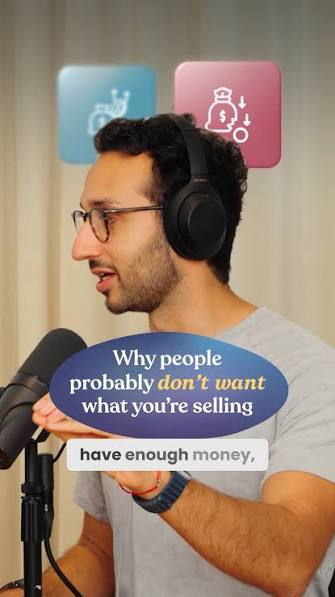
Ali Abdaal started his YouTube channel in 2017 while studying medicine at Cambridge University, initially creating videos to help students prepare for medical-school entrance exams. He continued creating content while working as a junior doctor, gradually expanding from study techniques into productivity, entrepreneurship, and intentional living.
That progression is what makes his brand interesting: he didn’t invent an expertise persona from scratch; he documented what he was learning and solving in his own life. His personal journey became the context through which people discovered his ideas.
What He Does Differently
Abdaal connects experience, education, and personal story. His content often answers a practical question while giving the audience a glimpse into how he actually applies the idea.
He also allowed his positioning to evolve. What began with medical-school study content developed into a broader focus on productivity, online business, and building a more intentional life, while the underlying promise remained useful educational content.
What You Can Learn From Him
You don’t need to wait until you’ve achieved your ultimate career goal before you start building a personal brand. Your current experience can be content if you are learning, testing, solving, or explaining something useful.
For example, if you’re a freelance copywriter learning how to attract better clients, document what you’re testing, what works, what fails, and what you learn. You’re not pretending to have all the answers; you’re creating useful documentation from real experience.
Practical exercise: Make three lists: What I know, What I’m learning, and What I’ve figured out through experience. Look for the overlap and turn those topics into educational content.
Then ask yourself, “What am I learning or doing right now that would be useful to someone one or two steps behind me?” That question can uncover dozens of authentic content ideas.
The lesson: You don’t have to build your brand after the journey; you can build it while documenting the journey.
7. Justin Welsh: He Built a Business Around a Narrow Personal Brand
Justin Welsh had already built a career in healthcare sales and marketing before leaving executive work after burnout and deciding to build a one-person business. He initially wrote about his professional experience, then noticed growing interest in how he was using LinkedIn, shifted his focus, and eventually built his brand around solopreneurship and building businesses online.
What makes his brand particularly useful to study is the connection between audience, content, and business model. He didn’t build an audience around a vague idea of entrepreneurship; he developed content around specific problems, listened to the questions people asked, and turned those recurring problems into products and educational resources.

What He Does Differently
Welsh treats his personal brand as a business system rather than simply a social-media presence. His content attracts a specific audience, his profile communicates what he helps them do, his newsletter gives him an owned relationship with that audience, and his products provide a natural next step.
He also demonstrates that niche clarity does not have to mean permanent confinement. His own positioning evolved from healthcare sales to LinkedIn growth and eventually to solopreneurship, showing that you can narrow your message today while allowing your expertise to develop over time.
What You Can Learn From Him
Don’t try to build a personal brand for everyone. Pick a specific audience, understand the problems they repeatedly bring to you, and create content that makes you useful to that particular group.
For example, instead of positioning yourself as a “marketing expert,” you could focus on helping coaches turn content into qualified leads. The narrower promise gives your content direction and makes it easier for the right people to recognize that you’re relevant to them.
Practical exercise: Review your last 20 client questions, DMs, emails, or conversations. Find the three problems that appear most often, choose the one you can solve best, and build your next 10 pieces of content around it.
Then connect that content to a logical next step; a consultation, service, newsletter, guide, workshop, or other useful resource. Your personal brand should not only attract attention; it should make the right business opportunity easier to create.
The lesson: A strong personal brand becomes more valuable when your content, audience, expertise, and offer point in the same direction.
8. Dorie Clark: She Built a Reputation Around a Body of Work
Dorie Clark began her career in journalism and politics before moving into consulting, speaking, teaching, and writing. Over time, she built a reputation around helping professionals become recognized experts, with books such as Reinventing You, Stand Out, and The Long Game reinforcing that territory.
What makes her brand particularly strong is that her expertise isn’t scattered across unrelated topics. Her books, articles, courses, speaking, and teaching all reinforce a larger body of work around professional visibility, expertise, reputation, and long-term career strategy.

What She Does Differently
Clark doesn’t treat every piece of content as a separate opportunity to get attention. Instead, she develops ideas deeply enough that one idea can become an article, book chapter, keynote, course, interview, or framework.
That creates something more valuable than a busy content calendar: intellectual ownership. The more connected pieces of work you create around a subject, the easier it becomes for people to see you as someone who has genuinely developed expertise in that area.
What You Can Learn From Her
Stop asking only, “What should I post this week?” Start asking, “What body of work am I building?”
For example, if you’re a content strategist, you could spend a year developing your thinking around content-to-conversion systems. Your LinkedIn posts, blog articles, case studies, newsletter, workshop, lead magnet, and eventually a book could all become different expressions of that larger idea.
Practical exercise: Choose one major subject you want to own. Then create a simple content map with five layers: short-form posts → long-form articles → framework → lead magnet/workshop → signature offer or book.
This approach also makes content creation easier because you’re no longer starting from zero every morning. You’re developing one intellectual asset from multiple angles.
The lesson: Don’t just build a content library. Build a body of work that strengthens your reputation every time you add to it.
9. Brené Brown: She Owns a Distinctive Intellectual Territory
Brené Brown built her reputation by researching subjects that were often treated as uncomfortable or difficult to discuss; vulnerability, courage, shame, empathy, and belonging. Her academic work eventually expanded into books, speaking, podcasts, and organizational education, creating a brand where her name is strongly connected to a clear set of ideas.
What makes this powerful is intellectual territory. She did not try to become known for every aspect of psychology or leadership; instead, she developed a recognizable area of expertise and kept building on it across different formats.

What She Does Differently
Brown combines research with accessible storytelling. Rather than presenting expertise as complicated academic knowledge, she translates it into language, stories, and frameworks that ordinary people can understand and use.
That combination creates authority without making the brand feel distant. The research gives her ideas substance, while the storytelling makes those ideas easier to remember and apply.
What You Can Learn From Her
You don’t need to own an entire industry to build authority. You need to identify a specific territory within your industry where you can develop distinctive knowledge and perspectives.
For example, a leadership consultant doesn’t have to talk about everything related to leadership. They could build a body of work around leading remote teams, difficult workplace conversations, or developing first-time managers.
Practical exercise: Write down the broad field you work in, then narrow it twice. Ask, “What specific subject within this field could I spend the next three to five years studying, teaching, and developing ideas around?”
Then build your content around that territory. Study it, collect examples, develop frameworks, challenge common assumptions, and document what you learn.
The lesson: You become easier to remember when your name consistently occupies a specific intellectual territory.
10. Ann Handley: She Made Her Voice Recognizable
Ann Handley built her career in digital marketing and writing, eventually becoming known for teaching businesses how to communicate more effectively. Her work spans books, speaking, consulting, and her newsletter, but the thread connecting them is clear: helping people communicate with more clarity, personality, and humanity.
What makes her brand memorable is not just what she teaches but how she teaches it. Her writing has a distinct voice, which means you can often recognize the thinking and tone behind the content even before seeing her name.

What She Does Differently
Many experts focus so heavily on sounding credible that their content becomes interchangeable. Handley takes the opposite approach: she combines expertise with personality, making educational content feel conversational rather than corporate.
That matters because expertise answers the question, “Can this person help me?” Voice answers another important question: “Do I want to keep listening to this person?”
What You Can Learn From Her
Don’t try to sound like an expert; try to sound like yourself at your most useful. Your vocabulary, humor, analogies, opinions, stories, and way of explaining complicated ideas can become part of what makes your brand recognizable.
Practical exercise: Take one piece of your existing content and rewrite it twice: first in the generic “professional” voice you normally use, then in the way you would explain the same idea to a smart client over coffee. Compare both versions and keep the one that sounds more naturally like you.
Then identify three characteristics you want your communication to consistently carry; for example, direct, practical, and conversational. Use those as a simple voice filter whenever you create content.
The lesson: Expertise establishes credibility, but a recognizable voice makes your expertise memorable.
11. Simon Sinek: He Turned One Idea Into a Global Brand
Simon Sinek‘s personal brand became strongly associated with one deceptively simple idea: start with WHY. His 2009 TED Talk introduced the Golden Circle, and he later expanded that idea through books, speaking, courses, podcasts, and leadership education.
The important part isn’t simply that he had a good idea; it’s that he developed the idea into intellectual property. The Golden Circle gives people a simple framework—WHY, HOW, and WHAT—that they can understand, remember, discuss, and apply.

What He Does Differently
Sinek doesn’t present his expertise as a collection of disconnected leadership tips. Instead, his content repeatedly connects back to a central philosophy about purpose, leadership, and the way people communicate.
That creates a powerful branding effect: when people hear “start with WHY,” they immediately have a mental connection to Simon Sinek. The idea acts almost like a logo, except it lives inside people’s minds.
What You Can Learn From Him
You don’t need to invent a revolutionary theory to create intellectual property. You can take a process you already use, organize it into clear steps, give it a useful name, and teach it consistently.
Practical exercise: Look at how you currently solve a problem for clients. Break your process into three to seven clear stages, name the framework, explain why each stage matters, and create content around each part.
The goal is not to manufacture complicated terminology. It is to make your expertise easier to understand, remember, and associate with you.
The lesson: A strong personal brand can turn one powerful idea into an entire ecosystem of content, products, and opportunities.
12. Pat Flynn: He Built Trust Through Transparency
Pat Flynn started Smart Passive Income after being laid off from his architecture job in 2008. He began sharing what he had learned from building an online resource for an architecture exam, and transparency quickly became a defining part of his brand.
Instead of presenting entrepreneurship as effortless success, Flynn documented experiments, results, failures, expenses, and lessons. His early income reports became particularly important because they gave his audience a behind-the-scenes view of what building an online business actually involved.

What He Does Differently
Flynn uses proof through transparency. Rather than saying, “This strategy works,” he has consistently shown what he tried, what happened, and what he learned from the experience.
That creates a different kind of credibility. You aren’t asking people to trust a claim when you can show them the process behind it.
What You Can Learn From Him
You don’t have to reveal private business information to become more transparent. Instead, document the decisions, experiments, processes, lessons, and results that are appropriate for your audience to see.
For example, a consultant could share how they redesigned a client’s content strategy, what they initially got wrong, why they changed direction, and what happened afterward. A freelancer could document how they improved their proposal process or tested a new client-acquisition approach.
Practical exercise: Pick one professional experiment you’re currently running and document it using five questions: What am I trying? Why am I trying it? What happened? What did I learn? What would I do differently?
Then turn those answers into a case study, post, newsletter, or video. Over time, these documented experiences become evidence of your expertise rather than simply claims about it.
The lesson: Don’t only tell people what you know. Show them what you’ve learned by doing.
13. Amy Porterfield: She Built a Brand Around One Audience and Transformation
Amy Porterfield moved from working on corporate marketing projects to building her own education business, eventually focusing her brand on helping entrepreneurs create and sell online courses. That focus gave her content a clear commercial direction: she wasn’t simply teaching “online marketing”; she was helping a particular type of person move toward a specific business outcome.

What She Does Differently
Porterfield connects content, audience, and offer very deliberately. Her podcast, free resources, educational content, and paid programs all reinforce the same broader transformation, so the audience doesn’t have to guess what she helps people accomplish.
This is an important distinction for service providers because visibility without direction can create attention without business. A personal brand becomes much stronger when the content naturally leads toward the problem you solve professionally.
What You Can Learn From Her
Start with the transformation rather than the content. Instead of asking, “What do I want to post about?”, ask, “What change do I help my ideal client make?”
For example, a content strategist might help coaches go from random posting to a content system that consistently generates qualified leads. That transformation can then shape the topics you teach, the examples you share, the lead magnet you create, and eventually the service you sell.
Practical exercise: Complete these three statements:
- I help: ______
- They currently struggle with: ______
- I help them get to: ______
Now review your last 10 pieces of content. If most of them don’t connect to that audience, problem, or transformation, you have a content alignment problem.
The goal isn’t to turn every post into a sales pitch. Instead, make your content the bridge between the problem your audience has and the solution you sell.
The lesson: A personal brand becomes commercially useful when your audience, expertise, content, and offer point toward the same transformation.
14. Sahil Bloom: He Turned Curiosity Into a Content Ecosystem
Sahil Bloom spent the first seven years of his career in finance before leaving that path and building an online audience around ideas on growth, wealth, learning, and living well. What began as a small audience in 2020 grew into The Curiosity Chronicle, a newsletter that now reaches more than 800,000 readers, alongside his writing, book, speaking, and business ventures.
What makes Bloom’s brand interesting is that he didn’t build everything around a job title. Instead, he built around a way of thinking; asking better questions, developing frameworks, and exploring ideas that help people make better decisions.

What He Does Differently
Bloom consistently turns abstract ideas into memorable frameworks and practical concepts. His website organizes his work around categories such as Frameworks & Tools, Life Lessons, Learning & Growth, and Productivity, giving his audience multiple entry points into the same broader brand. (Sahil Bloom)
He also built an owned-media channel rather than depending entirely on social platforms. His newsletter gives him a direct relationship with his audience while his articles, social content, book, and other ventures reinforce the same ecosystem. (Sahil Bloom)
What You Can Learn From Him
Your personal brand doesn’t have to revolve around your job title. You can build around a question you keep exploring, a problem you solve, a philosophy you teach, or a specific transformation you help people achieve.
For example, instead of positioning yourself simply as a “business consultant,” you could build your brand around helping small businesses make better growth decisions. Your posts, newsletter, frameworks, case studies, and services can all become different expressions of that central idea.
Practical exercise: Choose one broad idea you want your brand to represent. Then create four content categories around it: lessons, frameworks, stories, and practical tools.
Finally, choose at least one channel you own, such as a website or email list, and gradually move your audience there. Social media can introduce people to your thinking, but an owned audience gives your brand somewhere to live beyond an algorithm.
The lesson: Build more than an audience; build an ecosystem around your ideas.
What the Best Personal Brands Do Differently
After looking at these personal branding examples side by side, one thing becomes clear: the strongest brands are rarely built by accident. They are built through repeated decisions about what to talk about, who to help, what to believe, and how to turn expertise into something people can recognize.
Here are the patterns I would pay the most attention to if you’re building your own personal brand.
1. They Become Known for Something Specific
The strongest personal brands make it relatively easy to answer one question: “What is this person known for?”
Seth Godin is strongly associated with marketing, creativity, and meaningful work. Simon Sinek is associated with WHY and purpose-driven leadership, while Brené Brown is closely connected to vulnerability, courage, shame, and belonging.
You don’t need to reduce your entire career to one topic, but your audience needs a clear entry point. If someone visits your LinkedIn profile, website, or content for the first time, they should be able to understand what you know and why it matters within a few seconds.
A simple test is to ask five people who know your work, “What would you say I’m really good at?” If you get five completely different answers, your expertise may be broader in your head than it is in your audience’s mind.
2. They Have a Point of View
Expertise alone does not create a memorable personal brand because thousands of people can teach the same subject. Your point of view is what tells people how you think about that subject.
For example, saying “content marketing is important” is information, not positioning. Saying “most businesses don’t have a content problem; they have a positioning problem” gives your audience something to agree with, challenge, remember, and associate with you.
This doesn’t mean manufacturing controversial opinions simply to get engagement. It means developing informed beliefs about your industry and being willing to explain why you believe them.
How to Develop Your Point of View
Start with the work you’ve already done rather than trying to manufacture a clever opinion. Look at your experience and ask:
- What advice in my industry do I disagree with?
- What have I learned that I wish I knew earlier?
- What mistakes do I repeatedly see people making?
- What approach has consistently worked for me or my clients?
- What do I believe should be done differently?
Then turn those answers into clear statements.
Try completing these statements:
- I believe ______ about my industry.
- Most people get ______ wrong.
- I think businesses should stop ______.
- I think professionals should do more of ______.
- The approach I use instead is ______.
Those answers can become the foundation of your content and positioning.
3. They Repeat Their Core Message
One of the biggest mistakes I see in personal branding is the constant search for something new. People assume that because they have already talked about a subject, they should move on to something else.
Your audience does not experience your content the way you do. You may have written about positioning ten times, but a new follower might be seeing the concept for the first time today.
The best personal brands repeat their important ideas without making every piece identical. They explain the same principle through stories, examples, mistakes, frameworks, case studies, questions, and different formats.
A useful rule is to choose three to five core ideas and keep returning to them. If you cannot imagine talking about those ideas for the next two years, they probably aren’t strong enough to anchor your brand.
4. They Turn Expertise Into Intellectual Property
Strong personal brands don’t just share knowledge; they package knowledge into ideas people can remember.
Simon Sinek’s Golden Circle is a good example of this. The framework gives his audience a simple way to understand and discuss a larger philosophy about communication and purpose.
You can do something similar without inventing an elaborate theory. Take a process you already use, break it into clear steps, give it a useful name, and teach it consistently.
For example, if your process for improving a client’s marketing is Research → Position → Create → Distribute → Convert, that process can become a framework you use in articles, workshops, presentations, lead magnets, and client work.
Your goal is to move from “I provide a service” to “I have a way of thinking about this problem.”
5. They Build a Body of Work
A single viral post can create attention, but a body of work creates authority.
Look at someone like Dorie Clark: her books, articles, courses, speaking, and teaching reinforce related ideas about expertise, visibility, reputation, and long-term professional growth. The individual pieces become more powerful because they belong to a larger intellectual system.
I think about this as the difference between content production and asset building. Content production asks, “What can I publish today?” Asset building asks, “What am I building that will still represent my expertise a year from now?”
Your body of work could include blog posts, LinkedIn content, case studies, frameworks, research, newsletters, videos, workshops, books, templates, or courses. The important thing is that they should strengthen the same larger area of expertise.
6. They Develop a Recognizable Voice
Two experts can teach exactly the same subject and still build completely different brands because they communicate differently.
Ann Handley is a useful example because her expertise is reinforced by a recognizable writing voice. Her communication feels human and distinctive rather than like generic corporate marketing.
Your voice doesn’t need to be loud, funny, provocative, or highly informal. It simply needs to feel consistent enough that people can recognize your way of explaining things.
Start by choosing three words that describe how you want your communication to feel. Mine might be practical, direct, and conversational, while someone else’s could be analytical, calm, and thoughtful.
Then use those three words as a filter before publishing. If a piece sounds nothing like the person you want to become known as, rewrite it.
7. They Don’t Depend on One Platform
Social media can accelerate a personal brand, but it shouldn’t be the entire brand.
Neil Patel demonstrates the value of searchable content and owned resources, while Sahil Bloom shows how a newsletter can become a central part of a broader content ecosystem. The underlying principle is the same: strong brands create places where their ideas can continue working beyond a single social feed.
This matters because platforms change. Algorithms change, reach fluctuates, and audiences move.
You should therefore think in terms of an ecosystem rather than a single platform:
Social content → Website → Email list → Lead magnet → Offer
Your LinkedIn posts might attract attention, your website can demonstrate depth, your newsletter can build the relationship, and your offer can turn that relationship into a business opportunity.
8. They Turn Visibility Into Assets
Getting attention is not the same as building a valuable brand.
A follower count is an audience metric, but a personal brand becomes more commercially useful when attention is converted into assets such as an email list, community, case-study library, intellectual property, product, service, book, or referral network.
This is one reason I don’t recommend measuring personal branding success only by likes and followers. A post with 5,000 views that attracts the wrong audience may be less valuable than a post with 500 views that brings three qualified prospects.
Ask yourself what happens after someone discovers you. If the answer is simply “they might follow me,” you have an opportunity to build a stronger system.
9. They Let Personal Story Support Their Positioning
Personal stories can make expertise more memorable, but the story should serve a purpose.
Ali Abdaal’s journey from medicine into online education and entrepreneurship gives context to his content. Pat Flynn’s experience of being laid off and building an online business gave his audience a real story to follow.
You don’t need a dramatic origin story. Your career changes, mistakes, experiments, lessons, client experiences, failures, discoveries, and turning points can all provide useful context.
The key is to connect the story back to the audience. Don’t simply tell people what happened to you; show them what they can learn from what happened to you.
10. They Align Content With a Business Direction
A personal brand can generate significant attention and still produce very little business if the content and offer are disconnected.
Amy Porterfield’s brand is a useful example of alignment because her educational content, audience, and products point toward a recognizable transformation. The audience doesn’t have to guess what problem she helps solve or what the next step might be.
You should be able to draw a straight line between your content and your offer.
For example:
Audience: Coaches and consultants
Problem: They post consistently but struggle to generate qualified leads
Expertise: Content strategy and conversion
Content: Positioning, content systems, lead generation, conversion
Lead magnet: Content-to-Client Blueprint
Offer: Content Strategy & Conversion System
When those pieces reinforce one another, your personal brand starts functioning like a business system rather than a collection of social-media posts.
11. They Teach, Demonstrate, and Prove
The strongest experts rarely rely on one form of authority.
They teach through educational content, demonstrate expertise through their work and frameworks, and prove credibility through results, experience, research, case studies, or documented experiments.
Chris Do teaches through educational content. Brené Brown built authority through research and storytelling, while Pat Flynn has used transparency and documented experience to demonstrate what he has learned.
You can apply the same three-part system to your own brand:
Teach: Explain what your audience needs to know.
Demonstrate: Show how you apply your expertise.
Prove: Give evidence that your approach works.
If your content only teaches, people may find it useful but still wonder whether you can actually help them. If you only promote results, they may not understand how you think.
The combination creates a much stronger signal.
12. They Make Their Expertise Easier to Remember
People are exposed to enormous amounts of information every day, so being knowledgeable is not enough. Your ideas need some form of structure that helps people remember them.
That structure could be a framework, phrase, recurring series, metaphor, visual system, category, methodology, or distinctive way of explaining a problem.
This is why intellectual property and repetition matter so much. When an idea has a recognizable name or structure and you consistently connect it to your brand, it becomes easier for people to recall and share.
Ask yourself: “If someone remembered only three things from my content, what would I want those three things to be?”
Those three things should probably appear far more often in your content than they currently do.
The Bigger Pattern
When you put all these examples together, a strong personal brand starts to look less like a popularity contest and more like a system:
Clear positioning → Strong point of view → Consistent ideas → Recognizable voice → Valuable body of work → Owned audience → Relevant offer
The experts we studied use different platforms, personalities, industries, and business models, but the underlying logic is surprisingly similar.
They make deliberate choices about what they want to be known for, then reinforce those choices long enough for the market to remember them.
A Simple Personal Brand Blueprint
If you want to simplify everything above, use this structure:
1. Audience: Who do I want to attract?
2. Problem: What important problem do they have?
3. Transformation: What result do I help them achieve?
4. Territory: What subject do I want to become known for?
5. Point of view: What do I believe that shapes my approach?
6. Core ideas: What three to five ideas will I repeatedly teach?
7. Framework: What process or methodology can I name and own?
8. Content: What formats will I use to demonstrate my expertise?
9. Proof: What evidence can I consistently show?
10. Ecosystem: Where will people discover, trust, and eventually buy from me?
Once these pieces are connected, content creation becomes much easier because you are no longer building your personal brand post by post. You are building a recognizable system around your expertise.
Before creating more content, score yourself from 1–5 on each area:
| Area | Score |
|---|---|
| My audience is clearly defined | /5 |
| My positioning is easy to understand | /5 |
| I know what I want to be known for | /5 |
| I have a clear point of view | /5 |
| I consistently repeat core ideas | /5 |
| My content demonstrates expertise | /5 |
| My voice is recognizable | /5 |
| I have proof of my expertise | /5 |
| My content connects to an offer | /5 |
| I have an owned audience or asset | /5 |
Don’t worry about getting a perfect score. Look for the two or three areas with the lowest scores because those are usually more important than creating another 30 pieces of content.
If your positioning scores 2/5, more posting probably isn’t the answer. If your positioning is clear but your proof scores 2/5, focus on case studies, experiments, results, and demonstrations instead.
The goal is not to look like the experts in these personal branding examples. The goal is to build the strategic foundations that make your expertise easier to recognize, trust, remember, and eventually buy.
The Real Goal of Personal Branding
The goal isn’t to become famous on the internet. It is to become recognizable and trusted by the right people for something valuable.
When someone encounters your name, you want a clear association to form in their mind: a problem you solve, an idea you teach, a perspective you own, or a transformation you help create.
That is what the best personal branding examples ultimately teach us. None of them built their brands by trying to look exactly like another expert.
They made strategic choices about what they wanted to be known for, then reinforced those choices through years of content, work, ideas, relationships, products, and experiences.
That is the part worth copying.
Copy the discipline of becoming known for something valuable.
Your personal brand becomes powerful when your expertise is clear, your ideas are memorable, your content demonstrates your thinking, your reputation is supported by proof, and your audience knows what to do next.
So if you’re looking at these personal branding examples and wondering where to begin, don’t start by asking, “What should I post?”
Start with a much more important question:
“What do I want people to remember about me when I’m not in the room?”
Then build your brand around the answer.
 0
0
 20
20
 20
20