
To turn visibility into paying clients, you were told “Just give value and post consistently, the clients will come.”
So you do it.
You show up on LinkedIn.
You write thoughtful posts.
You share carousels on Instagram.
You record short-form videos.
You optimize your bio.
You stay consistent.
And yet… nothing.

A few likes.
Some polite comments.
Maybe one “Great post!” from someone who will never buy from you.
Meanwhile, you scroll and see another coach announcing:
“Signed 3 new clients this week.”
“Booked out in 10 days.”
“Closed $15K from one post.”
And you start asking yourself the quiet question no one wants to say out loud:
What are they doing that I’m not?
This is where the conversation around how to turn visibility into paying clients gets distorted.
Because visibility is not the same as client acquisition.
And consistent posting is not the same as a visibility marketing strategy.
Across LinkedIn groups, coaching communities, and founder forums, the frustration sounds eerily similar:
- “I’m visible but I’m not converting.”
- “My content gets engagement but no inquiries.”
- “I went viral once and it didn’t translate into revenue.”
These are not beginners asking these questions.
These are smart consultants. Skilled coaches. Experienced service-based entrepreneurs. Founders who know their craft.
They don’t lack expertise. They lack conversion architecture. And that’s the gap most conversations around personal branding case studies ignore.
Why Some Professionals Are Able To Turn Visibility To Clients in Days
If visibility were the only variable, then everyone posting daily would be flooded with leads. But they aren’t. The difference isn’t volume. It isn’t luck. And it isn’t even necessarily audience size.
The professionals who figure out how to get clients from LinkedIn, Instagram, or even TikTok quickly understand something critical:
They are not trying to “grow an audience.”They are building a client acquisition system.
Their content doesn’t just inspire. It pre-sells.
It doesn’t just educate. It diagnoses.
It doesn’t just motivate. It positions.
And most importantly, it directs.
When you study authority positioning examples from successful consultants and coaches, a clear pattern emerges:
They don’t chase visibility.
They engineer it.
How to Turn Visibility to Paying Clients: What Is Actually Working (2024–2026 Trends)
If you zoom out from the noise of daily posting advice and actually study the people who consistently teach others how to turn visibility into paying clients, a clear pattern emerges. The strategies that are working between 2024 and 2026 are not about hacks or trends. They are about precision, positioning, and engineered conversion.
Alex Hormozi
Let’s start with Alex Hormozi, whose frameworks around offer creation and value communication have influenced thousands of coaches and consultants. In $100M Offers, Hormozi argues that most professionals do not have a traffic problem; they have an offer clarity problem.
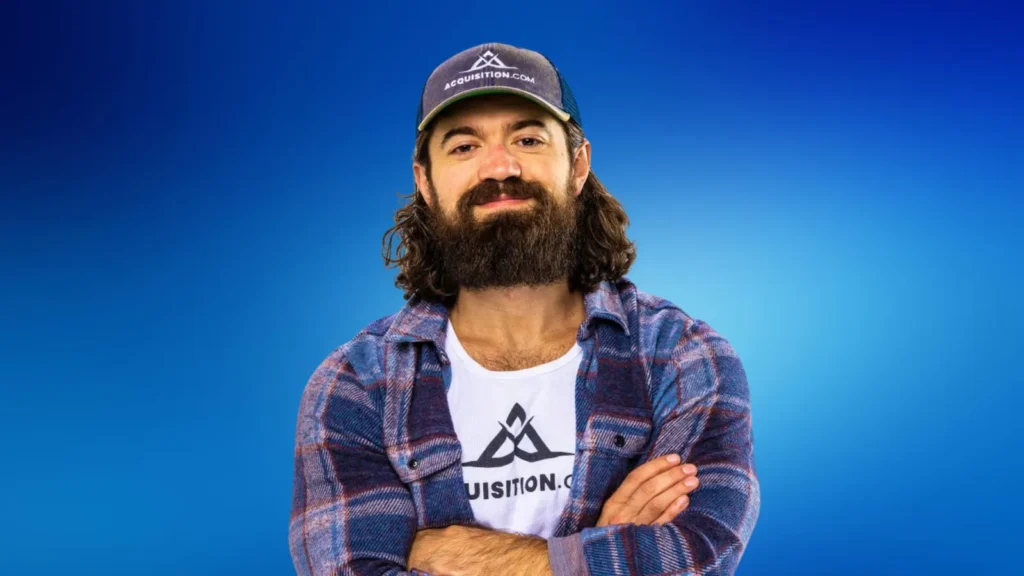
His concept of “value equation” emphasizes increasing perceived value through dream outcomes, likelihood of achievement, and reducing time delay and effort. What does that mean for visibility marketing strategy?
It means your content must reinforce the strength of your offer. Hormozi frequently demonstrates proof stacking — layering testimonials, data, case examples, and guarantees — to collapse skepticism.
When professionals adopt this approach, their content stops being inspirational and starts becoming evidence-based. That shift alone dramatically improves their ability to convert content into clients.
Chris Do
Then there is Chris Do, founder of The Futur, who has long emphasized authority positioning over popularity. His philosophy is simple but powerful: teach what you want to be hired for. Instead of chasing trends, he advocates sharing deep, specific expertise that demonstrates capability.
This aligns strongly with modern personal branding case studies where consultants land clients not because they are viral, but because they are clear. Chris Do often explains that when you give away your thinking process, you attract buyers who value how you think, not just what you produce.
That mindset turns content into a pre-selling mechanism rather than just a visibility play.
Justine Welsh
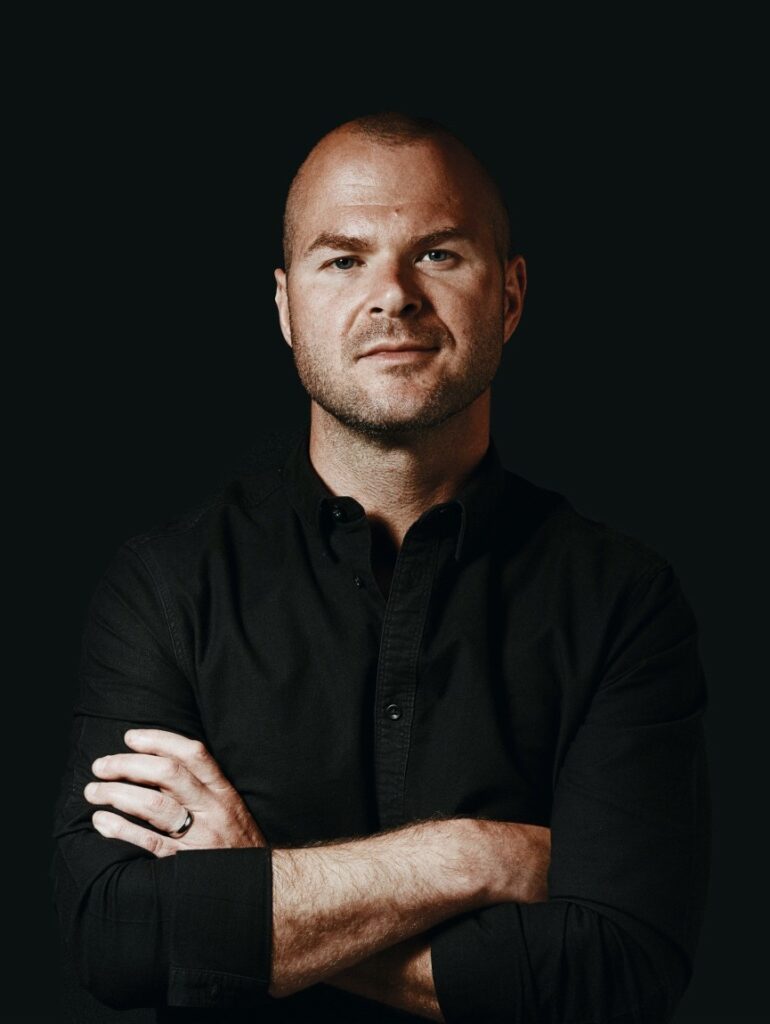
Similarly, Justin Welsh has built a multi-million-dollar one-person business largely through disciplined, problem-specific positioning on LinkedIn. Welsh consistently teaches that growth and client acquisition come from simplicity and repetition.
Instead of broad motivational content, he focuses on defined pain points for solopreneurs and repeats core themes. His approach demonstrates how to get clients from LinkedIn without chasing virality.
By anchoring content around a narrow problem set and pairing it with clear calls to action, he transforms visibility into predictable inbound interest. His model is a modern blueprint for monetizing personal brands through structured content systems.
Gary Vaynerchuk
On the other end of the spectrum, Gary Vaynerchuk continues to champion the attention economy. His philosophy centers around volume, platform-native content, and contextual relevance. Gary Vee’s message is clear: attention is the asset.
However, what many miss is that attention must be contextualized within your niche. He frequently emphasizes creating content tailored specifically to each platform’s behavior patterns.
For service-based entrepreneurs, this means understanding that how to turn visibility into paying clients on LinkedIn differs from doing so on TikTok or Instagram. The format may change, but the conversion infrastructure must remain intact.
Daniel Priestley
Finally, Daniel Priestley, author of Key Person of Influence, frames visibility as a positioning game. His framework suggests that becoming known for something specific — publishing content, building partnerships, creating scalable products — accelerates authority and trust.
Priestley’s work highlights that authority positioning examples consistently outperform generic branding efforts. When you are perceived as a “key person” in a defined category, client acquisition becomes easier because trust precedes the sales conversation.
How Professionals Turn Visibility Into Paying Clients – Lessons From Experts
Across these experts, several trends consistently emerge:
Micro-niche positioning
Broad positioning is fading. Professionals who clearly define their niche, not just “business coach,” but “B2B SaaS onboarding consultant”, shorten the trust-building process. Specificity reduces friction and improves how quickly visibility converts into revenue.
Authority-based content over motivational content
Motivational posts may drive engagement, but authority-driven analysis drives inquiries. Breaking down case studies, sharing frameworks, diagnosing mistakes, these create pre-qualified leads who already respect your expertise.
Clear call-to-action funnels
A post without a next step is unfinished. Whether it’s “Comment ‘audit’,” “Book a clarity call,” or “DM me the word ‘strategy,’” structured CTAs transform passive readers into active prospects. This is a critical shift for consultants wondering how to get consulting clients in 30 days.
Content as a pre-selling mechanism
The strongest client acquisition strategies for consultants do not rely on persuasion during the sales call. Instead, the call becomes confirmation. The content has already handled objections, demonstrated competence, and clarified outcomes.
DM conversion scripts and follow-up systems
Increasingly, professionals are combining public visibility with private conversation flows. Structured DM responses, qualification questions, and mini-audits accelerate trust and compress the sales cycle.
Offer-market-message alignment
Perhaps the most overlooked factor in how to turn visibility into paying clients is alignment. If your messaging attracts one type of audience but your offer serves another, conversion stalls. Experts consistently stress refining messaging until the right audience self-identifies and opts in.
Taken together, these insights dismantle the old belief that consistent posting alone builds a client pipeline. What actually works is strategic visibility, visibility engineered around authority, proof, clarity, and direction. The professionals who understand this are not just visible. They are converting.
Practical Framework: The 14-Day Visibility-to-Client Sprint
If the goal is to understand how to turn visibility into paying clients quickly, then visibility must be treated like a focused campaign, not an open-ended habit. The 14-Day Visibility-to-Client Sprint is designed to compress positioning, authority, and conversion into a short execution window.
It is not theoretical. It reflects patterns seen in modern personal branding case studies and reinforced by experts like Justin Welsh and Alex Hormozi, both of whom emphasize clarity, repetition, and structured conversion.
This sprint assumes you already have expertise. What you may lack is compression and direction.
Step 1: Define a Micro-Problem
Do not start with “I help businesses grow.”
Start with something measurable and narrow.
Instead of:
- Business growth consultant
Try:
- I help SaaS founders fix churn messaging.
- I help executive coaches close premium clients without lowering prices.
- I help B2B agencies increase discovery call show-up rates.
Micro-problems accelerate authority positioning. They reduce cognitive load for the reader and increase perceived specialization. According to positioning principles discussed by Daniel Priestley in Key Person of Influence, clarity around your niche strengthens perceived expertise and market differentiation.
Your micro-problem must meet three criteria:
- It is painful.
- It is urgent.
- It is tied to revenue or growth.
If it does not impact money, time, or stress, it will not convert quickly.
This is the foundation of any serious visibility marketing strategy.
Step 2: Publish 5 Authority Posts in 7 Days
Over one week, publish five tightly structured authority posts around your micro-problem. Each post should function as pre-selling content.
Post 1: Problem Breakdown
Explain the root cause of the issue. Diagnose it better than your audience can articulate it themselves. When readers feel accurately diagnosed, trust builds immediately.
Post 2: Mistake Analysis
Break down common mistakes your ideal clients are making. This positions you as someone who sees patterns, not someone who offers generic encouragement.
Post 3: Case Example
Share a real client story, anonymized if necessary. Include measurable outcomes. This reinforces proof, a principle strongly emphasized by Hormozi’s proof stacking philosophy.
Post 4: Framework Post
Introduce a simple, named framework that outlines your approach. Frameworks create intellectual property. They signal authority.
Post 5: Offer Post
Directly articulate your service. Who it’s for. What outcome it delivers. What happens next.
This sequence transforms content from scattered ideas into a structured conversion narrative. It also increases the probability of getting consulting clients in 30 days because repetition builds familiarity and familiarity builds trust.
Step 3: Add a Clear Call to Action
Authority without direction stalls.
Every post in this sprint should include a frictionless next step. The CTA must be specific and actionable.
Examples:
- Comment “AUDIT” and I’ll review your positioning.
- DM me “CHURN” if you want the messaging framework.
- Book a 20-minute clarity call here.
Do not rely on passive language like “Let me know if this helped.” That is engagement-driven, not conversion-driven.
Clear CTAs convert visibility into paying clients because they filter serious prospects. When someone comments a keyword or books a call, they self-identify as interested. That dramatically reduces sales resistance later.
Step 4: Build a DM Follow-Up System
Public visibility initiates awareness. Private conversation accelerates trust.
Your DM system should include:
- A short acknowledgment.
- A clarifying question.
- A micro-diagnosis.
- A transition to call or offer.
Example structure:
“Thanks for commenting ‘AUDIT.’ Quick question — are you currently struggling more with messaging clarity or lead quality?”
Once they respond, you offer a short, high-value insight. Then you transition:
“Based on what you’ve shared, I think a 20-minute strategy call would help you see the gap clearly. Here’s the link.”
This is not aggressive. It is structured.
Fast follow-up compresses the sales cycle. Delayed follow-up allows attention to dissipate.
Step 5: Refine Your Offer Positioning Script
If someone asks, “What exactly do you do?” your answer must be sharp.
Not:
“I help businesses grow.”
But:
“I help B2B founders fix conversion bottlenecks in their sales messaging so they can increase qualified discovery calls within 30 days.”
An effective offer positioning script contains:
- Who it’s for.
- The specific problem.
- The measurable outcome.
- A time frame if possible.
This aligns with the value equation concept from Hormozi’s framework, where clarity around outcome and speed increases perceived value.
When offer-market-message alignment is tight, conversion speeds up naturally.
To Turn Visibility to Paying Clients: Why This Sprint Works
This framework works because it aligns all the elements discussed earlier:
- Clear niche.
- Sharp problem articulation.
- Authority-based content.
- Frictionless CTA.
- Fast follow-up.
- Offer clarity.
It transforms visibility from passive broadcasting into a client acquisition strategy for consultants and service providers.
You are not posting to stay relevant.
You are posting to pre-qualify buyers.
Visibility is not about being known.
It is about being known for something specific.
In a crowded digital environment, general visibility creates noise. Specific visibility creates demand.
When clarity meets consistency, conversion speeds up. When positioning aligns with proof and direction, attention turns into inquiry. When inquiry meets structured follow-up, revenue follows.
If you want to master how to turn visibility into paying clients, stop chasing reach. Posting more won’t get you clients.
Start engineering relevance.
Visibility alone does not generate revenue.
Strategic visibility does.
 0
0
 20
20
 20
20